
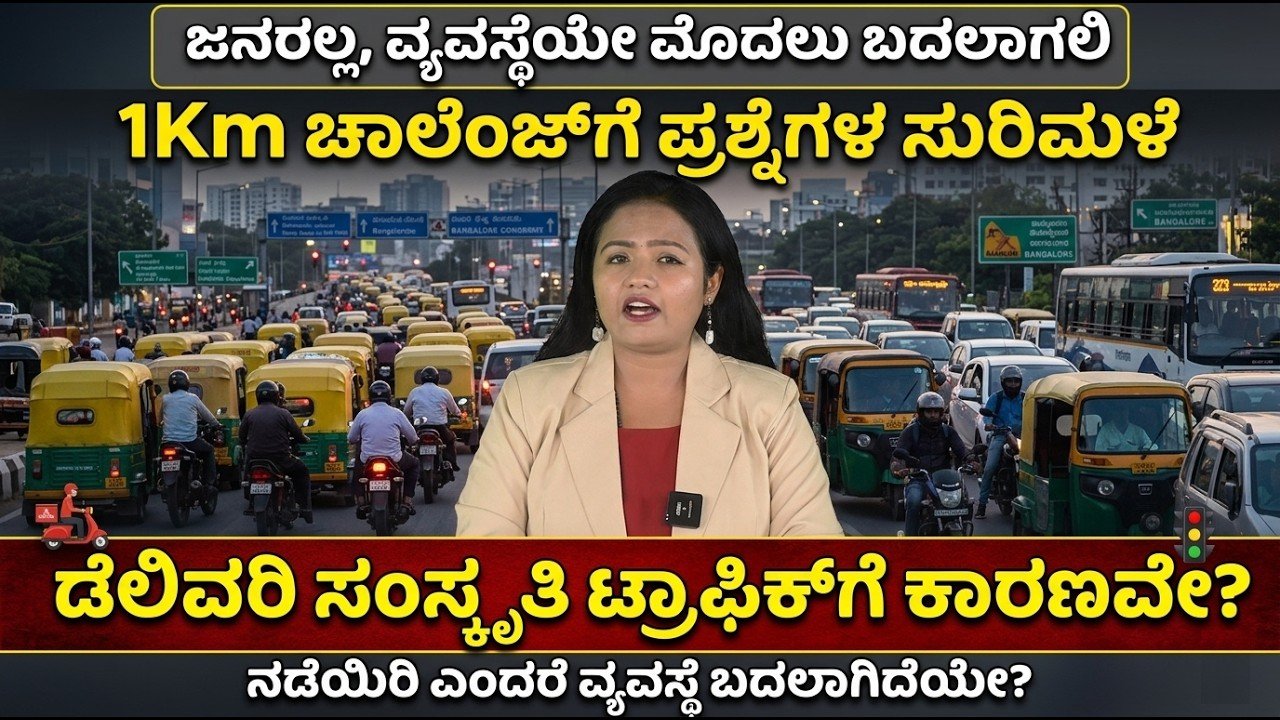
In an effort to address Bengaluru’s growing traffic congestion, pollution, and public health concerns, the Greater Bengaluru Authority (GBA) has launched the “1 Kilometre Challenge” campaign. The initiative encourages citizens to walk instead of using vehicles for trips within one kilometre, promoting healthier lifestyles and reducing unnecessary traffic on city roads.
The campaign aims to reduce short-distance vehicle usage, which contributes significantly to traffic congestion, fuel consumption, and air pollution. By choosing to walk for nearby errands, authorities believe citizens can help create a cleaner and more sustainable Bengaluru.
However, the initiative has also sparked debate among residents. In an era where groceries, milk, vegetables, medicines, and other essentials are delivered directly to doorsteps, many question whether people will be willing to change their habits. Additionally, ride-hailing services such as Ola, Uber, and Rapido make even short-distance travel convenient and affordable, reducing the incentive to walk.
Critics argue that traffic congestion is not caused solely by citizens’ travel choices. They point to issues such as inadequate public transport connectivity, poor pedestrian infrastructure, encroached footpaths, and rapid urban expansion as the real challenges that need attention. Many believe that systemic improvements should accompany behavioural change campaigns.
Supporters of the initiative, on the other hand, see it as a step toward building a healthier and more environmentally conscious city. Walking can improve physical fitness, reduce carbon emissions, and encourage better use of public spaces.
The larger question remains: should citizens change their habits first, or should urban systems and infrastructure improve before expecting behavioural change? As Bengaluru continues to search for solutions to its mobility challenges, the success of the 1 Kilometre Challenge may depend on how effectively it is supported by better footpaths, safer streets, and improved public transportation.
Ultimately, the campaign has reignited an important conversation about the future of urban mobility and sustainable living in Bengaluru.